Showing posts with label Space. Show all posts

Monday, March 4, 2013

China Plans To Man Orbiting Space Lab In Summer


China announced plans to launch its fifth manned space mission Shenzhou-10 sometime between June and August. Its mission is the second and final docking with the Tiangong-1 the country's first space platform used to perfect rendezvous procedures and serve as a test bed for the later Tiangong-2 and Tiangong-3 space station. Shenzhou-10 will have a three person crew reportedly including the first female Taikonaut. Recently, the Chinese Space Agency has reached out to the European Space Agency to cooperate on the future station. 

Sunday, March 3, 2013

SpaceX Capsule Docks With Space Station


After thruster faults following a Friday launch the US-back company SpaceX capsule Dragon docked with the International Space Station. While SpaceX is a privately held company, its biggest contractor is the United States government who approved $270 million in subsidies for private space firms last year. SpaceX also launches from NASA and USAF sites. 

Friday, March 1, 2013

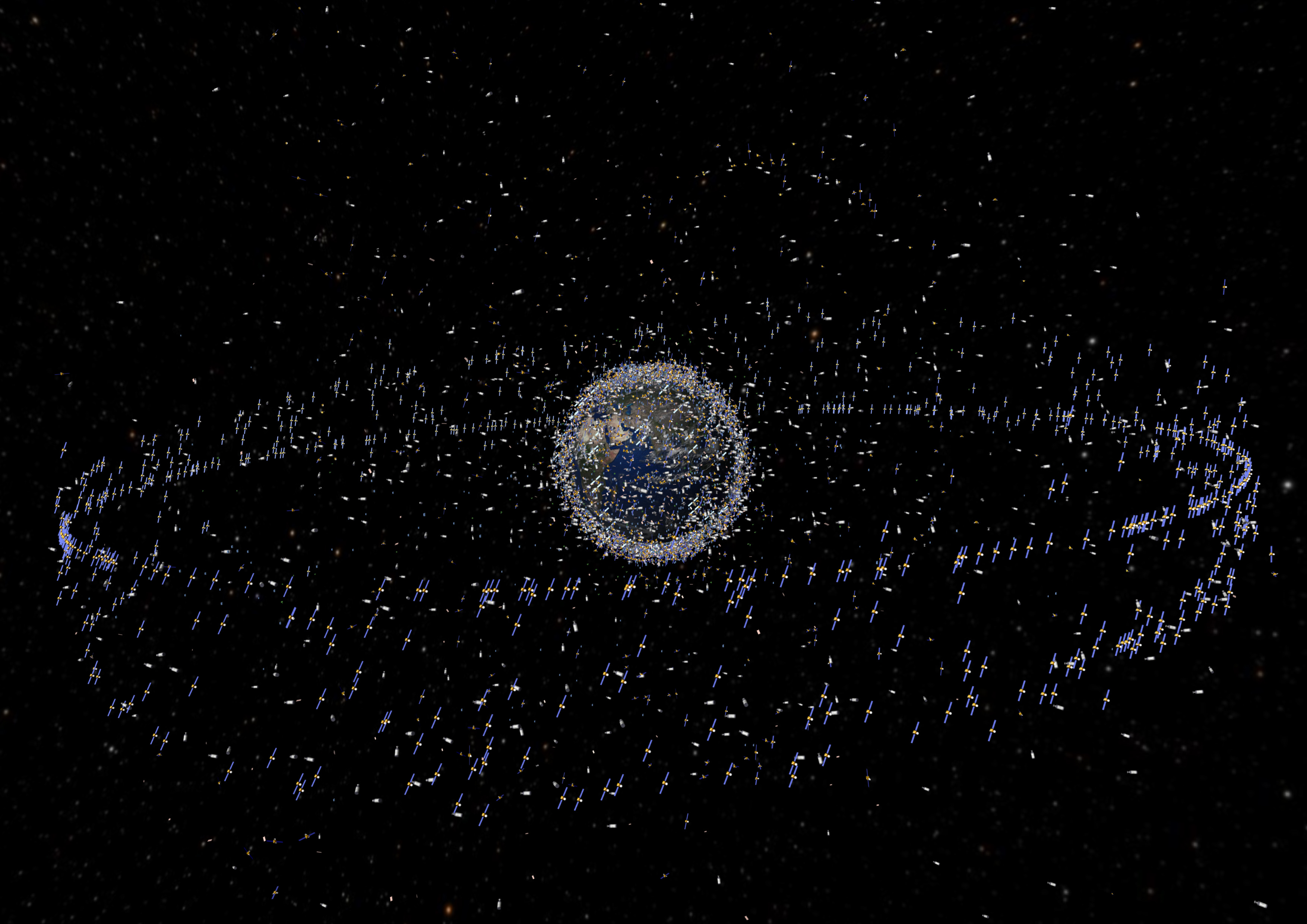
EU Launches New Initiative To Track Space Debris


The European Union announced a new program to help member nations track debris in space. Economic losses due to satellite maneuvering to avoid collisions are expected to double over the next decade. Currently there are estimated to be over 600,000 objects larger than 1 cm, 16,000 of which are over 10 cm. Collision of even a 1 cm object can critically damage a satellite. Removing the debris is extremely cost prohibitive but the new EU project would work to locate and monitor the debris and notify satellite operators to hazards as well as the public in case of a reentry. The EU is stepping forward with a space surveillance and tracking (SST) service because they previously relied on US systems to provide the information but with an increasing amount of debris being produced because of more launches US sources are stretching thin. Aid will largely be in the form of financial support of existing member state resources. 


Monday, February 25, 2013

India Launches 7 Satellites On One Rocket


India launched its Polar Satellite Launch Vehicle   from Satish Dhawan Space Centre in Sriharikota, India with seven satellites on board, including an Indo-French weather satellite, a satellite to detect asteroids, and two small space telescopes. It was the 23rd successful launch of the PSLV. 

Monday, February 18, 2013

US GAO Warns Of Weather Satellite Coverage Gap


The US Government Accounting Office today issued a report saying that gaps in satellite weather coverage are at high risk. The Joint Polar Satellite System that is supposed to replace the previous generation Polar Orbiting Environmental Satellites have been behind schedule and over budget for at least three years. The GAO report estimates that the current JPSS prototype in orbit will last three years while the NASA/NOAA authority that build and run the systems say it will last a total of five years. Cost overruns, missed project milestones, technical and management problems associated with the five sophisticated sensors that make up the JPSS in the GAO report. The report also predicted that there might be a 17 to 53 month gap between the failure of the current prototype and the first JPSS. A the chief of the World Meteorological Organization's space observation program warned that as much as 40% of the data used in current weather forecast models would be lost if polar coverage is lost. 

Sunday, February 17, 2013

Satellite Helps US Ship Shoot Down Missile.


The missile cruiser USS Lake Erie was able to shoot down a medium-range ballistic missile in a test using tracking information sent from a satellite, before the ship's powerful radar detected the missile. This was the first time remote data was used for an intercept and the 22nd success out of 30 tries for the  SM-3 Ballistic Missile Defense program. Twenty-six US navy cruisers and destroyers are equipped for BMD with more on the way.